Pediatrics
15 guides
Development and Behavioral Pediatrics
15 pages
Genetics
17 pages
Growth and Development
11 pages
Immunization
16 pages
Neonatology
21 pages
Pediatric Cardiology
22 pages
Pediatric Endocrinology
12 pages
Pediatric Gastroenterology
14 pages
Pediatric Hematology
17 pages
Pediatric Infectious Diseases
19 pages
Pediatric Nephrology
13 pages
Pediatric Neurology
14 pages
Pediatric Nutrition
14 pages
Pediatric Respiratory Disorders
18 pages
Pediatric Rheumatology
13 pages
Pediatrics Study Material for Gulf Licensing Exams
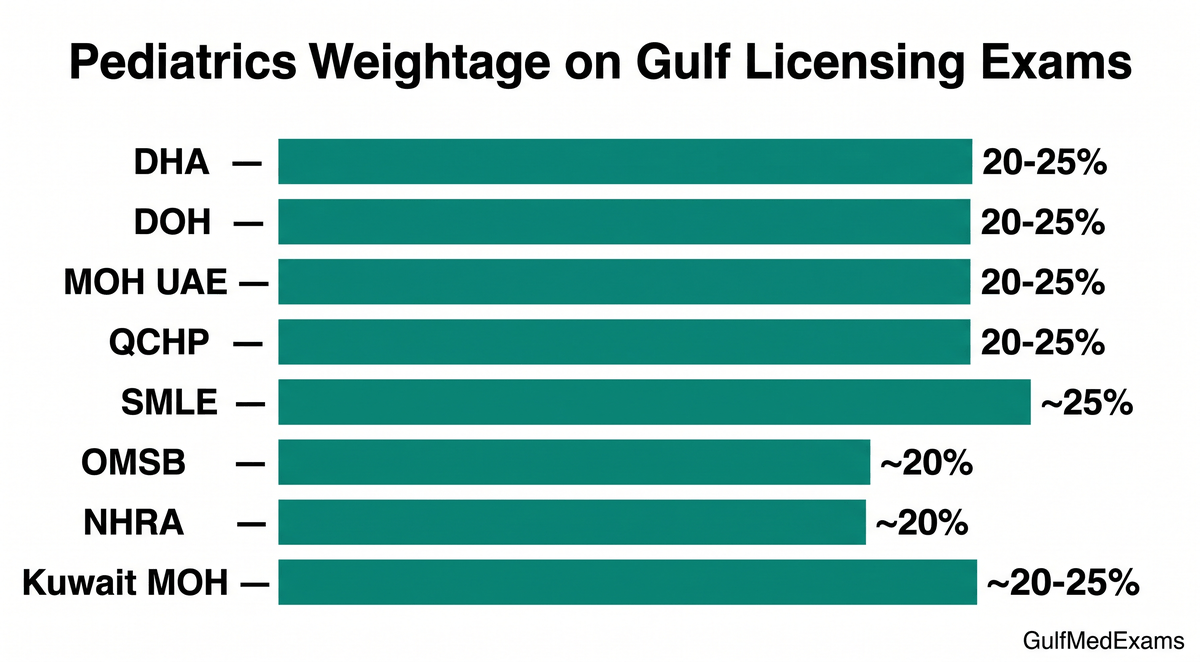
Pediatrics is the second-highest-weighted subject on most Gulf licensing exams — typically 20–25% of questions on the DHA, DOH, MOH UAE, and QCHP and ~25% on the SMLE per the SCFHS blueprint. It is also, by candidate-reported margin, one of the most under-prepared subjects: general practitioners without a paediatric rotation background frequently walk in strong on Medicine and Surgery but bleed marks in Pediatrics. The Neonatology and Immunization blocks alone can decide 15–20 questions on a single sitting.
This hub covers 15 sub-specialty study guides across 236 topic pages, each mapped to high-yield exam points that repeat on Prometric sittings. Browse the full topic list of any guide without an account, or create a free account to preview the first few pages of each one. Full guide access is part of the GulfMedExams subscription. Pair your reading with recall-verified MCQs to convert reading into score-ready recognition.
15 sub-specialty guides
Each guide below has high-yield exam points and common Prometric distractors, ordered by how often the topic appears on recent Gulf exam sittings — the first five contribute roughly 60% of all Pediatrics MCQs.
Neonatology
21 pagesThe single highest-yield pediatrics sub-specialty on every Gulf exam — expect 8–12 neonatology MCQs on DHA and 15+ on SMLE. Covers neonatal jaundice workup and phototherapy thresholds (Bhutani nomogram), respiratory distress syndrome vs. transient tachypnea, neonatal sepsis, meconium aspiration, hypoglycaemia, birth asphyxia and HIE staging, and TORCH infections.
Read study guideImmunization
16 pagesConsistently high-yield because vaccine schedules and contraindications lend themselves to single-best-answer MCQs. Covers the WHO EPI schedule, GCC-specific national schedules, catch-up vaccination for migrant children, live vaccine contraindications, post-exposure prophylaxis, and adverse event recognition.
Read study guidePediatric Cardiology
22 pagesCovers congenital heart disease differentiation (cyanotic vs. acyanotic), the five T's of cyanotic disease, VSD and PDA management, coarctation of the aorta, rheumatic heart disease, Kawasaki disease diagnostic criteria and IVIG timing, and pediatric arrhythmia recognition.
Read study guidePediatric Infectious Diseases
19 pagesCovers common childhood viral exanthems, bacterial meningitis empirical therapy by age, UTI in infants and pyelonephritis, pediatric pneumonia by age group, acute otitis media, tuberculosis in children, and pediatric HIV screening.
Read study guidePediatric Respiratory Disorders
18 pagesCovers bronchiolitis management, childhood asthma stepwise therapy (GINA), croup severity assessment (Westley score) and dexamethasone dosing, epiglottitis vs. croup, cystic fibrosis, foreign body aspiration, and pediatric OSA.
Read study guidePediatric Neurology
14 pagesCovers febrile seizure classification and workup, status epilepticus in children, cerebral palsy classification, neonatal seizures, headache red flags in children, developmental regression differentials, and neurocutaneous syndromes.
Read study guideGrowth and Development
11 pagesCovers WHO growth chart interpretation, faltering growth workup, developmental milestones by age, red-flag delays, short stature evaluation, precocious and delayed puberty (Tanner staging), and mid-parental height assessment.
Read study guideGenetics
17 pagesEspecially high yield in Gulf catchment populations given consanguinity rates. Covers autosomal recessive disorders common in the region (thalassaemia, sickle cell, G6PD deficiency), Down syndrome and trisomy 18/13, Turner and Klinefelter syndromes, fragile X, Marfan, and inborn errors of metabolism screening.
Read study guidePediatric Hematology
17 pagesCovers iron deficiency anaemia in infants and toddlers, sickle cell disease acute crises and chronic management (extremely high yield in Gulf populations), thalassaemia major/minor differentiation, hemophilia A and B, ITP, and hemolytic disease of the newborn.
Read study guidePediatric Nutrition
14 pagesCovers exclusive breastfeeding recommendations and contraindications, formula feeding choices, complementary feeding introduction, vitamin D and iron supplementation, protein-energy malnutrition, micronutrient deficiencies, and childhood obesity screening.
Read study guidePediatric Gastroenterology
14 pagesCovers acute gastroenteritis and dehydration assessment, oral rehydration therapy, pyloric stenosis, intussusception, Hirschsprung disease, gastroesophageal reflux vs. GERD in infants, celiac disease screening, and constipation in children.
Read study guidePediatric Nephrology
13 pagesCovers nephrotic syndrome (minimal change disease, first-line steroids), post-streptococcal glomerulonephritis, UTI workup in infants and VCUG indications, vesicoureteral reflux, hemolytic uremic syndrome, and pediatric hypertension evaluation.
Read study guidePediatric Endocrinology
12 pagesCovers type 1 diabetes presentation and DKA management in children, congenital adrenal hyperplasia, congenital hypothyroidism and newborn screening, growth hormone deficiency, rickets, and disorders of sexual development.
Read study guidePediatric Rheumatology
13 pagesCovers juvenile idiopathic arthritis subtypes, Henoch-Schönlein purpura, Kawasaki disease (cross-referenced with Pediatric Cardiology), acute rheumatic fever (Jones criteria — still exam-relevant in Gulf populations), and juvenile SLE.
Read study guideDevelopment and Behavioral Pediatrics
15 pagesCovers autism spectrum disorder screening (M-CHAT), ADHD diagnostic criteria and stimulant therapy, learning disabilities recognition, breath-holding spells, sleep disorders in children, encopresis and enuresis, and adolescent risk-behaviour screening (HEEADSSS).
Read study guideQuick facts
- Weightage on Gulf exams:
- 20–25% of total questions (second-highest after Internal Medicine)
- Sub-specialties covered:
- 15 — Neonatology, Pediatric Cardiology, Immunization, Pediatric Infectious Diseases, Pediatric Respiratory Disorders, Pediatric Neurology, Growth and Development, Genetics, Pediatric Hematology, Pediatric Nutrition, Pediatric Gastroenterology, Pediatric Nephrology, Pediatric Rheumatology, Pediatric Endocrinology, Development and Behavioral Pediatrics
- Total topic pages:
- 236
- Exams covered:
- DHA, SMLE, DOH, MOH UAE, QCHP, OMSB, NHRA, Kuwait MOH
- Recommended MCQ volume:
- 1,800–2,500 pediatrics-only MCQs before exam day
- Last updated:
How Pediatrics is weighted on each Gulf exam
Approximate Pediatrics share of each Gulf licensing exam, based on published blueprints and candidate-reported recalls from 2024–2026 sittings. Weightages fluctuate ±5% per cycle — treat these as planning anchors, not fixed quotas.
| Exam | Pediatrics % | MCQs | Duration | Notes |
|---|---|---|---|---|
| DHA (Dubai) | 20–25% | 150 | 3 hrs | No negative marking |
| SMLE (Saudi Arabia) | ~25% (±5%) | 200 | 4 hrs | Pass score 560 (scaled, 200–800) |
| DOH (Abu Dhabi) | 20–25% | ~150 | 3 hrs | Formerly HAAD — Pearson VUE delivery |
| MOH UAE | 20–25% | ~150 | 3 hrs | Overlaps heavily with DHA/DOH |
| QCHP (Qatar) | 20–25% | 150 | 3 hrs | Aligned to DHP GP blueprint |
| OMSB (Oman) | ~20% | 150 | 3 hrs | Pearson VUE delivery |
| NHRA (Bahrain) | ~20% | ~150 | 3 hrs | Blueprint by profession category |
| Kuwait MOH (KMLE) | ~20–25% | 100–120 | ~3 hrs | Varies by profession category |
High-yield Pediatrics topics for Prometric exams
Across the past 24 months of candidate-submitted recalls, these Pediatrics topics appeared most frequently on Gulf licensing exams. Use this as a triage list when preparation time is limited.
- 1
Neonatal jaundice
Pathological vs. physiological, phototherapy vs. exchange thresholds, breastfeeding vs. breast-milk jaundice
- 2
Febrile seizures
Simple vs. complex classification, workup thresholds, when to admit
- 3
Immunization schedule
Routine, catch-up, contraindications, post-exposure prophylaxis
- 4
Bronchiolitis
RSV recognition, supportive management, when to admit
- 5
Pediatric asthma
GINA stepwise therapy, inhaler technique, exacerbation management
- 6
Kawasaki disease
Diagnostic criteria, IVIG timing, coronary complications
- 7
Sickle cell crisis
Vaso-occlusive vs. splenic sequestration vs. aplastic crisis differentiation
- 8
Neonatal sepsis
Early vs. late onset, empirical antibiotic choice, sepsis workup
- 9
Acute gastroenteritis
Dehydration assessment, ORS composition, when to hospitalise
- 10
Developmental milestones
Red flags at 6, 12, 18, 24 months and 3–5 years
Sample Pediatrics MCQ
Representative of the clinical vignette format used on all Gulf Prometric exams. Attempt it before revealing the explanation.
A 3-day-old term neonate is brought to the emergency department by his mother. He appears jaundiced from face to mid-abdomen. He was born by spontaneous vaginal delivery at 39 weeks, birth weight 3.2 kg, and is exclusively breastfed. Feeding is going well and he has passed meconium and multiple wet nappies. Blood group is O positive; mother is O positive. Total serum bilirubin is 285 μmol/L (16.7 mg/dL). Direct bilirubin is 12 μmol/L (0.7 mg/dL).
Which of the following is the single most appropriate immediate management step?
- A.Discharge with reassurance and outpatient bilirubin check in 48 hours
- B.Start phototherapy based on the Bhutani nomogram
- C.Immediate exchange transfusion
- D.Stop breastfeeding and switch to formula for 48 hours
Answer: B. Start phototherapy based on the Bhutani nomogram
A 72-hour-old term infant with a total bilirubin of 285 μmol/L sits above the phototherapy threshold on the Bhutani nomogram for a low-risk term neonate. Direct bilirubin is normal, so this is unconjugated hyperbilirubinemia — likely physiological or breastfeeding jaundice given the age of onset and clinical picture. Option A delays needed treatment. Option C is reserved for total bilirubin above the exchange threshold or evidence of acute bilirubin encephalopathy — neither applies here. Option D is not recommended for physiological or breastfeeding jaundice; support continued breastfeeding with more frequent feeds to reduce enterohepatic circulation of bilirubin.
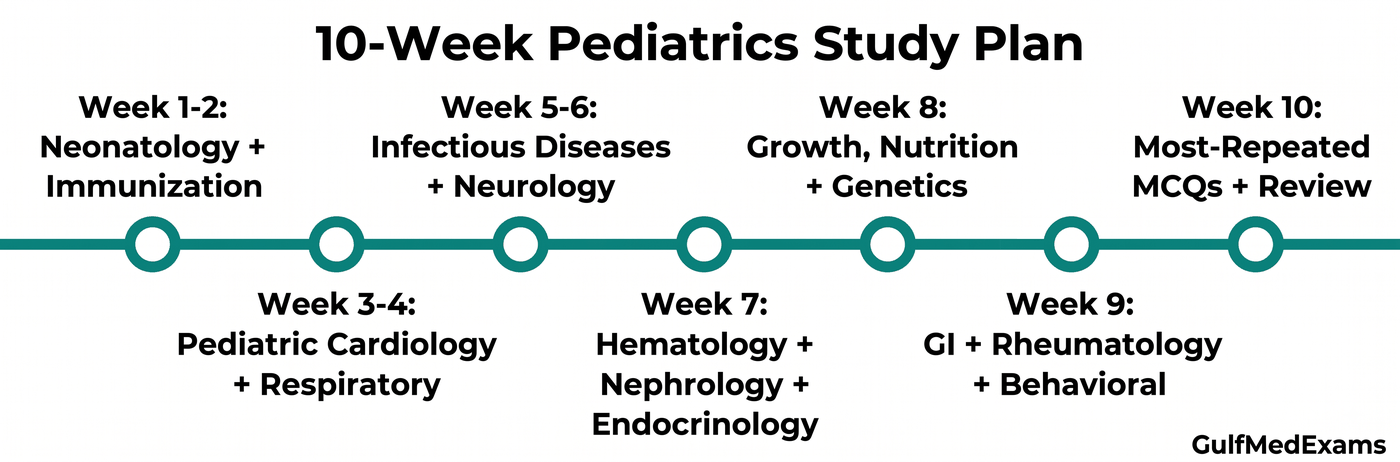
Recommended 10-week Pediatrics study plan
Designed for a working doctor with 2–3 hours of daily study time, assuming an exam roughly 10 weeks out. It groups sub-specialties by clinical age band (neonate → infant → child → adolescent), matching how Gulf exams tend to structure pediatric vignettes.
| Weeks | Focus areas | Daily MCQ target | Deliverable |
|---|---|---|---|
| 1–2 | Neonatology + Immunization (highest yield) | 35 MCQs (25 topic + 10 mixed review) | Baseline pediatrics diagnostic score |
| 3–4 | Pediatric Cardiology + Respiratory Disorders | 40 MCQs (30 topic + 10 spaced review) | First subject accuracy > 65% |
| 5–6 | Infectious Diseases + Pediatric Neurology | 40 MCQs (30 topic + 10 review) | Second full-length pediatrics block |
| 7 | Hematology + Nephrology + Endocrinology | 40 MCQs (30 topic + 10 review) | Weakness list refined |
| 8 | Growth & Development + Nutrition + Genetics | 40 MCQs (25 topic + 15 mixed timed) | Sub-specialty accuracy ≥ 70% |
| 9 | GI + Rheumatology + Behavioral Pediatrics | 40 MCQs (25 topic + 15 review) | Third full-length pediatrics block |
| 10 | Most-repeated MCQs + weak-area retesting | 50 MCQs timed, no new topics | Exam-ready confidence check |
Candidates who cleared Pediatrics using this hub
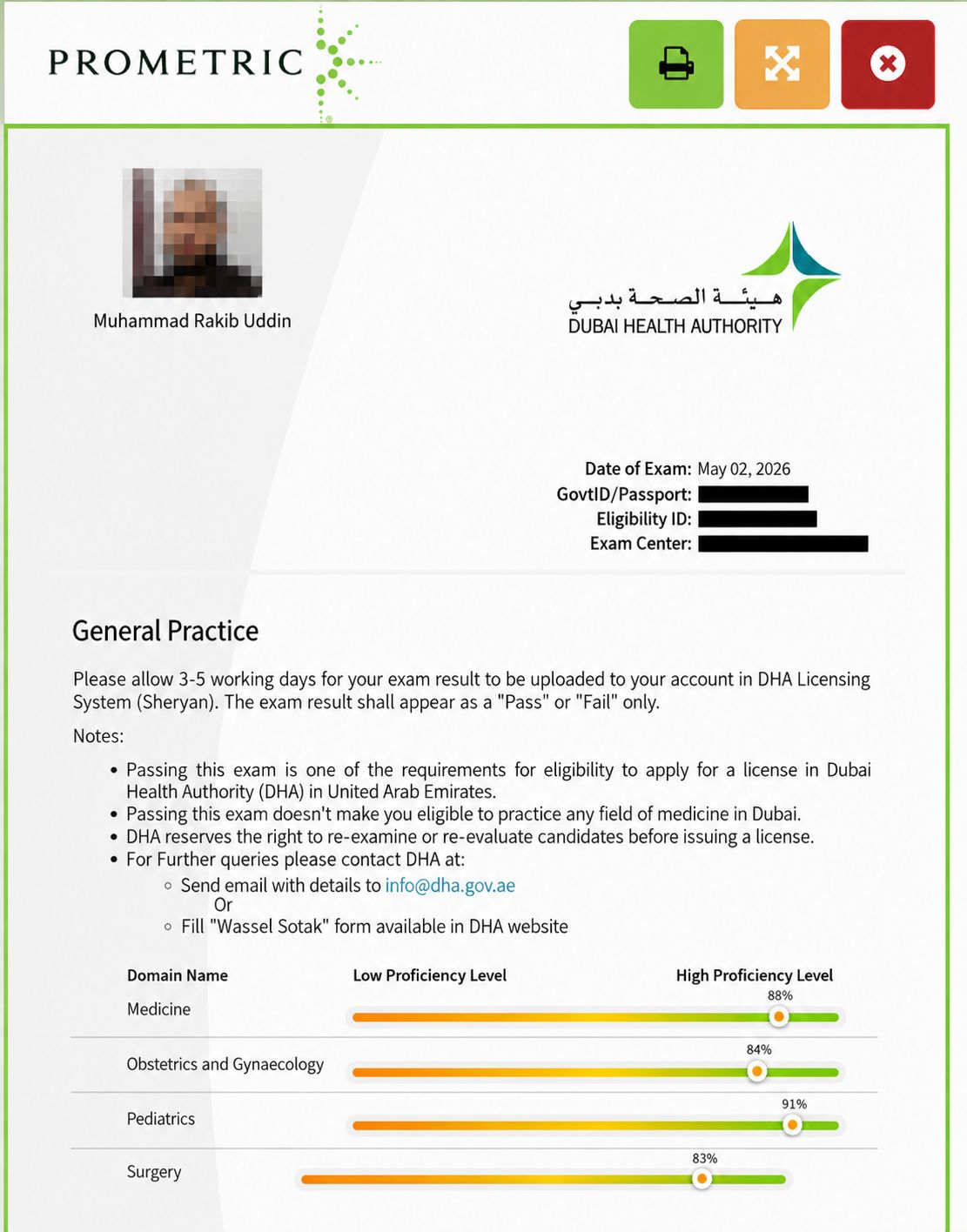
“It's a pleasure for me. I sat the DHA exam last month and, Alhamdulillah, scored 86.5% on my assessment. GulfMedExams helped me tremendously — about 70% of the questions felt familiar from my preparation. I've already recommended this site to many candidates.”
Dr. Rakib Uddin
DHA · 86.5% · Medicine 88%, Pediatrics 91%, OBGYN 84%, Surgery 83% · May 2026
Frequently asked questions about Pediatrics on Gulf exams
How is Pediatrics weighted on the DHA and SMLE exams?
Pediatrics accounts for approximately 20–25% of DHA exam questions and around 25% of SMLE questions (±5% per SCFHS blueprint). On the 150-question DHA paper that translates to roughly 30–38 pediatric MCQs; on the 200-question SMLE, expect around 40–55. It is the second-highest-weighted subject after Internal Medicine on almost every Gulf exam.
What Pediatrics topics repeat most often on Gulf Prometric exams?
Based on 2024–2026 candidate recalls, the most repeated topics are neonatal jaundice management, immunization schedule and contraindications, febrile seizures, bronchiolitis, Kawasaki disease diagnostic criteria, and sickle cell crises. These six topics alone typically account for 12–18 questions across a full Pediatrics block on any Gulf licensing exam.
How many Pediatrics MCQs should I do before the exam?
Target 1,800–2,500 Pediatrics-specific MCQs before your Prometric sitting. This is the volume that most first-attempt passers report and matches roughly 30 MCQs per day over a 10-week preparation window. Quality of review matters more than raw quantity — always read the explanation, even for questions you answered correctly.
Which Pediatrics sub-specialty is the highest yield?
Neonatology is the highest-yield pediatrics sub-specialty across every Gulf exam, contributing 25–30% of pediatric questions. Immunization and Pediatric Cardiology tie for second, each accounting for 12–18% of the pediatric block. Prioritise these three sub-specialties in the first four weeks of your study plan.
Is Pediatrics harder for general practitioners without a paediatric rotation?
It can be. Candidates whose internship or house-officer years skipped pediatrics report Pediatrics as their weakest subject on both the SMLE and DHA. The solution is disciplined MCQ practice using recall-verified banks aligned to the exam blueprint — 30–40 pediatric MCQs a day for 10 weeks reliably closes the gap for most doctors starting from a low baseline.
Can I practice Pediatrics MCQs by sub-specialty?
Yes. The MCQ bank lets you filter by sub-specialty — Neonatology, Immunization, Pediatric Cardiology, and so on — so you can drill weak areas without wading through unrelated questions. Timed sub-specialty blocks are the fastest way to identify which sub-specialty is dragging your overall Pediatrics accuracy down.
Do the Pediatrics guides cover Gulf-region-specific conditions?
Yes. Content explicitly covers conditions with higher prevalence in Gulf catchment populations, including consanguinity-linked autosomal recessive disorders, thalassaemia and sickle cell disease, G6PD deficiency, rheumatic heart disease, and vitamin D deficiency rickets. Immunization content covers GCC national schedules alongside WHO EPI.
Is the Pediatrics content on GulfMedExams free?
The Pediatrics hub and the topic list for every sub-specialty guide are free to browse without an account. The free tier gives you 100 MCQs and two mini mock exams — the same in every country — so you can test the platform before paying anything. Full guide content and the complete MCQ bank are part of the GulfMedExams subscription, which is priced by region; check the pricing page for the current rate in your country.
How do I combine the study guides with MCQ practice?
Read the study guide for one topic — say, neonatal jaundice — first. Then immediately attempt 15–20 MCQs on that topic. Review every explanation, correct or not. Return to the study guide 48 hours later to re-read only the sections that matched your wrong answers. This active-recall loop converts passive reading into exam-ready recognition faster than any single-pass study method.
Related resources
Subject hubs
Exam-specific guides
Medical review
Reviewed by: Dr. Mohsin Ali Baloch, MBBS, FCPS (Gastroenterology), SCFHS Senior Registrar — Gastroenterology.
Last updated: .
Review methodology: Study guides are cross-checked against current international clinical guidelines (NICE, AAP, WHO, GINA), GCC national immunization schedules, the published exam blueprints of each licensing authority, and candidate-submitted recalls from recent sittings.
Start practising Pediatrics MCQs
Combine the study guides above with recall-verified MCQs to convert reading into exam-ready recognition. Free preview of every sub-specialty.
Practice Pediatrics MCQs